
 EN ▾EN ▾
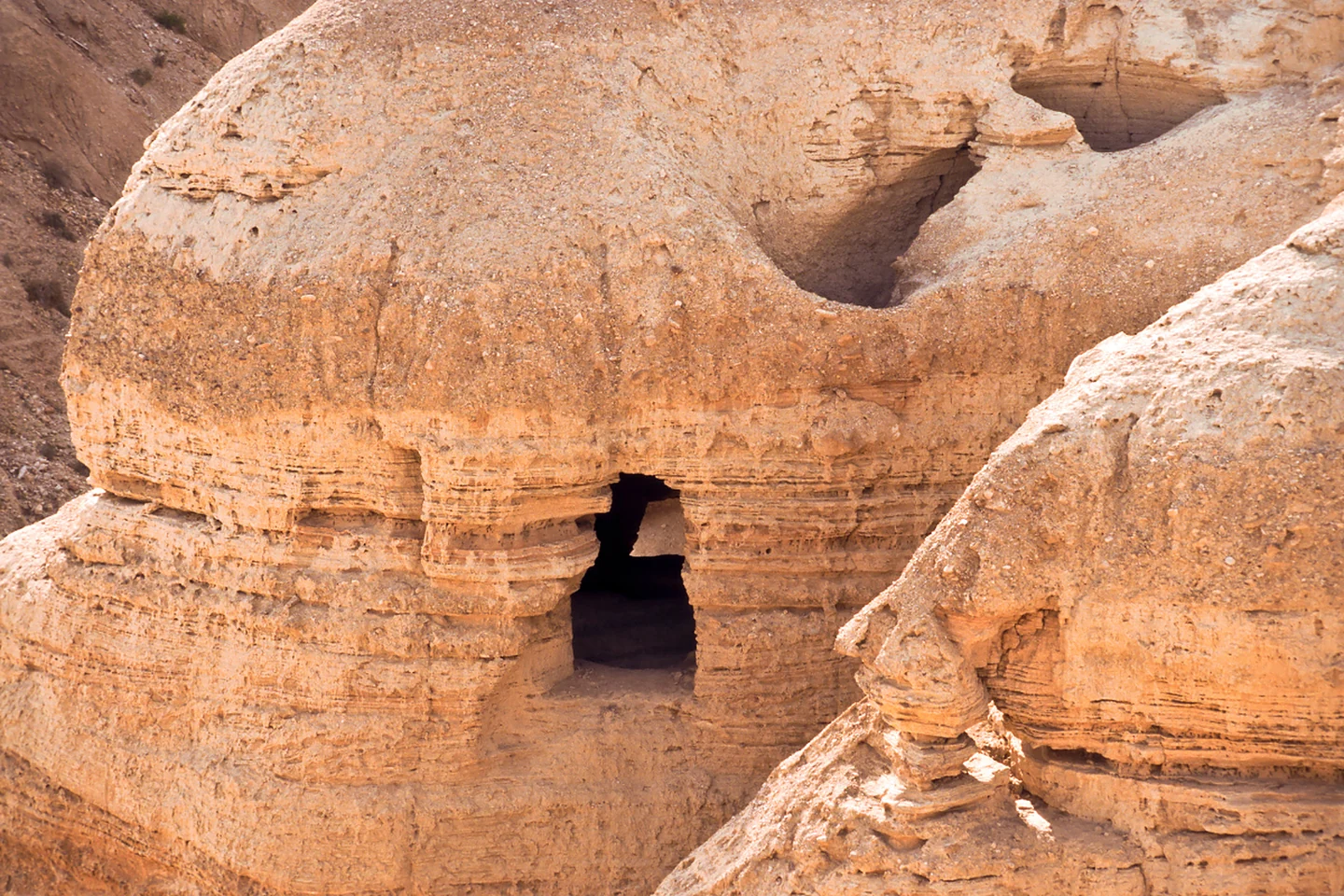

Qumran is an ancient settlement on a dry plateau above the northwestern shore of the Dead Sea, famous as the place where the Dead Sea Scrolls were found.
In caves in the surrounding cliffs, a shepherd in 1947 discovered clay jars holding scrolls that had lain hidden for nearly two thousand years. They include the oldest known copies of almost every book of the Hebrew Bible, written and kept by a devout community that lived here in the time before and during the life of Jesus.
You can walk the ruins of their settlement, see the ritual baths and the room where the scrolls were copied, and look up at the caves where they were hidden.
Because the scrolls found here confirm how faithfully the words of Scripture have been carried to us across the centuries. The book of Isaiah found at Qumran matches the Bible we read today with remarkable closeness.
"The grass withers and the flowers fall, but the word of our God endures forever." (Isaiah 40:8)
What can you see at Qumran?
The ruins of the community, the ritual baths, and the caves in the cliffs. For pilgrims, Qumran is where the reliability of the Bible stops being an argument and becomes something you can stand in front of, a quiet, powerful confirmation of the word that endures.
Holy Sites
Tell us which sites you hope to see and we will shape a journey around them.


