
 EN ▾EN ▾
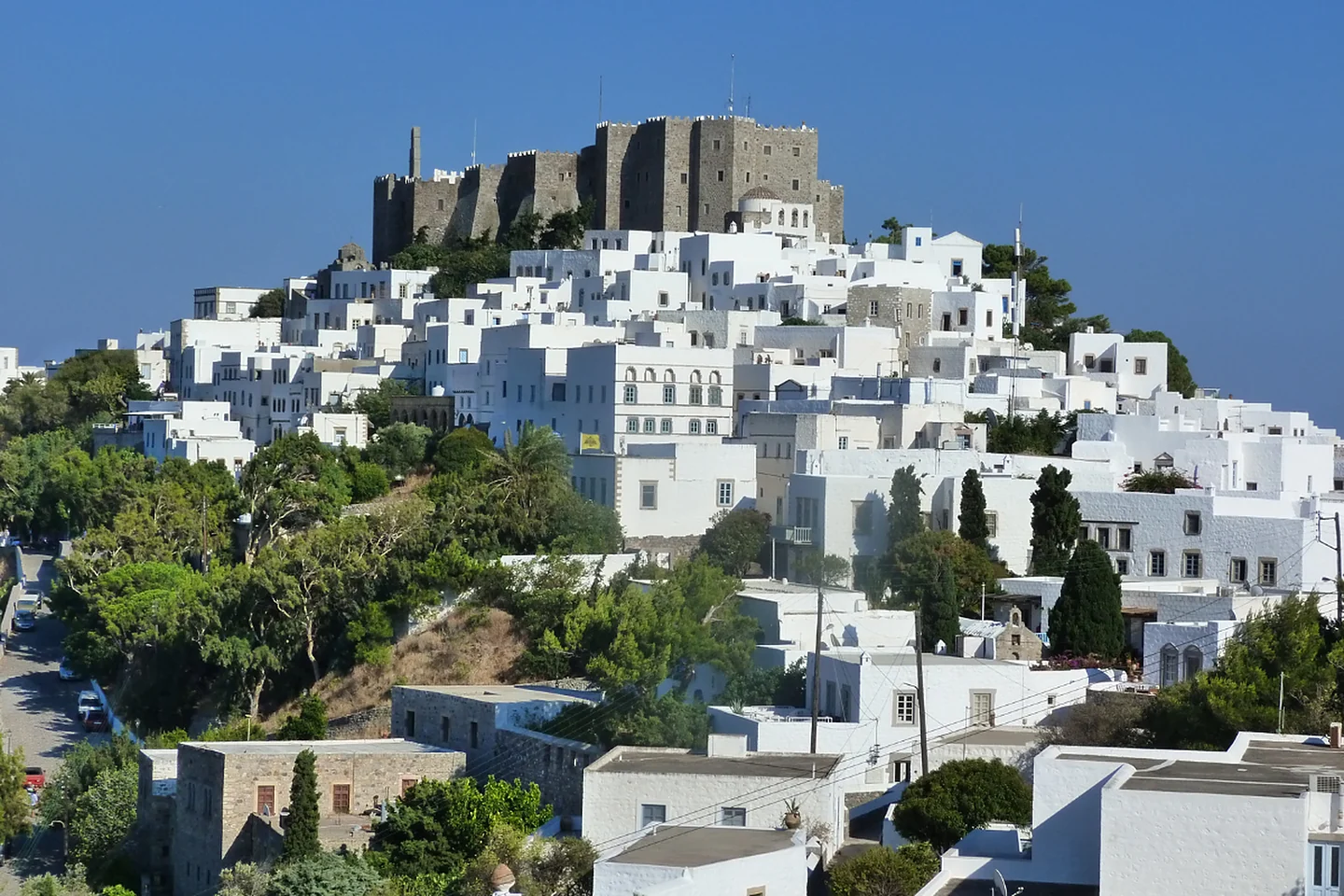

Patmos is a small, rocky island in the Aegean Sea, honored as the place where the Apostle John was exiled and received the visions written down in the Book of Revelation.
Partway up the hillside lies the Cave of the Apocalypse, where tradition says John heard the voice like a trumpet and saw his visions. In the rock you can still see the marks pilgrims have honored for centuries. High above stands the great fortified Monastery of Saint John, watching over the island and the sea.
The whitewashed village of Chora surrounds the monastery, its lanes winding between old sea captains' houses. The whole island has a quiet, prayerful atmosphere found in few other places.
Here John, exiled for his faith, received the revelation of Jesus Christ, the visions of heaven and the letters to the seven churches that make up the last book of the Bible.
The book opens with his own words about the place. "I, John, was on the island of Patmos because of the word of God and the testimony of Jesus." (Revelation 1:9)
Why does Patmos matter to pilgrims?
It is where the final book of the Bible was received, a place of exile turned into a place of vision. Sitting quietly in the cave where John saw heaven opened, pilgrims often feel the nearness of the eternal that fills the Book of Revelation.

A small Greek island in the Aegean Sea, usually reached by cruise ship on a footsteps of Paul or Revelation journey.
The Cave of the Apocalypse and the fortified Monastery of Saint John, above the village of Chora.
John was exiled here and received the visions of the Book of Revelation.
Holy Sites
Tell us which sites you hope to see and we will shape a journey around them.


