
 EN ▾EN ▾
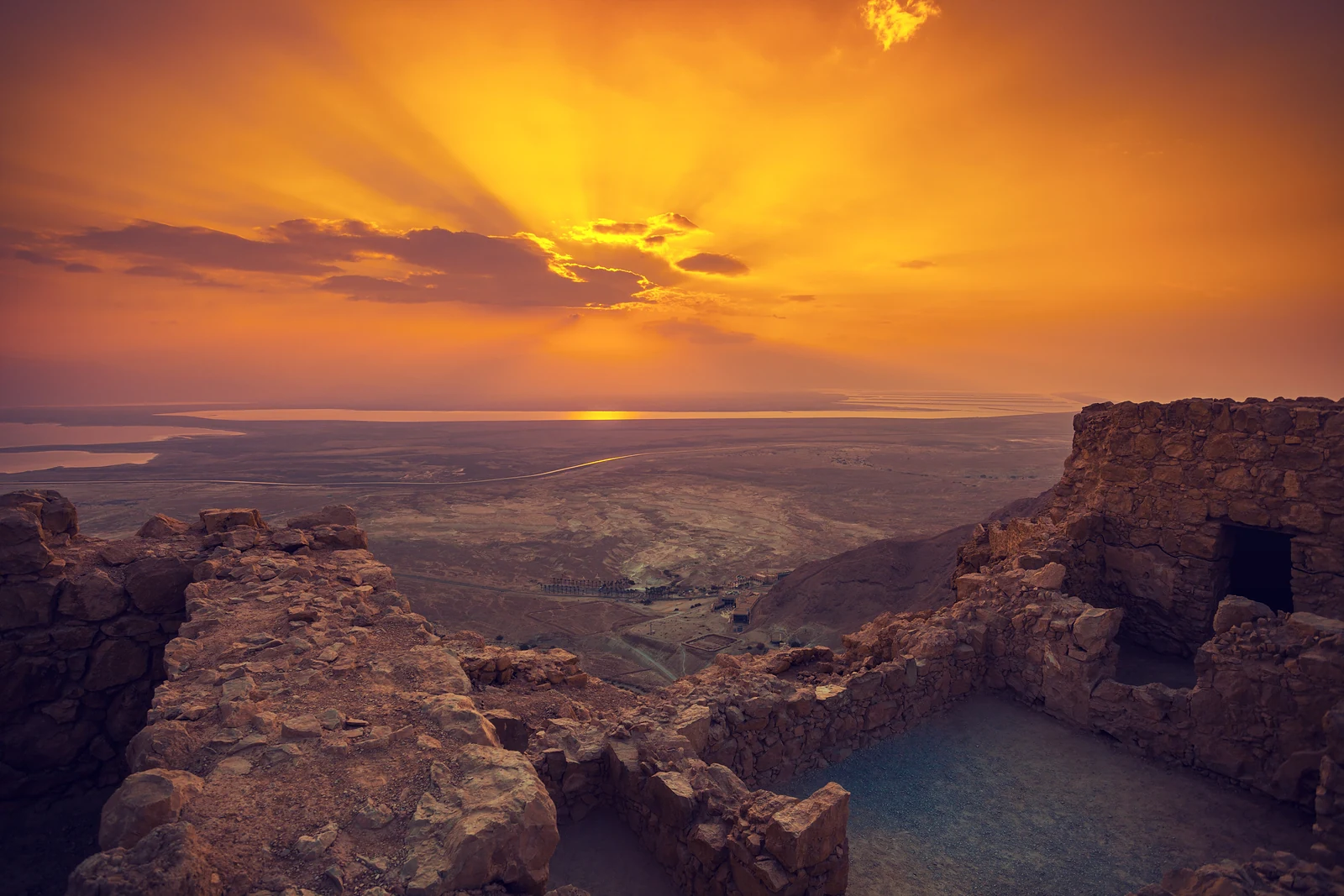

Masada is an ancient fortress on a high, flat mountaintop overlooking the Dead Sea, famous as the site of a Jewish last stand against Rome.
King Herod built a palace-fortress here in the first century BC, on a plateau that rises sheer from the desert floor. Decades later it became the final stronghold of Jewish rebels against the Roman Empire, and their story of resistance has made Masada a lasting symbol of courage.
The ruins on top, the cable car ride, and the vast desert views make it one of the most dramatic sites in the whole country.
A small group of Jewish rebels held out against a massive Roman siege here until the fortress finally fell in the year 73.
The Romans built an enormous ramp to breach the walls, the remains of which are still visible. The story of the defenders has been told for two thousand years.
Why do pilgrims visit Masada?
It brings the world of the first century, the era of Jesus and the early church, powerfully to life. Standing on Masada, looking out over the desert and the Dead Sea, pilgrims grasp the scale and drama of the Roman world into which Christianity was born. It gives the New Testament its historical stage.
Holy Sites
Tell us which sites you hope to see and we will shape a journey around them.


