
 EN ▾EN ▾

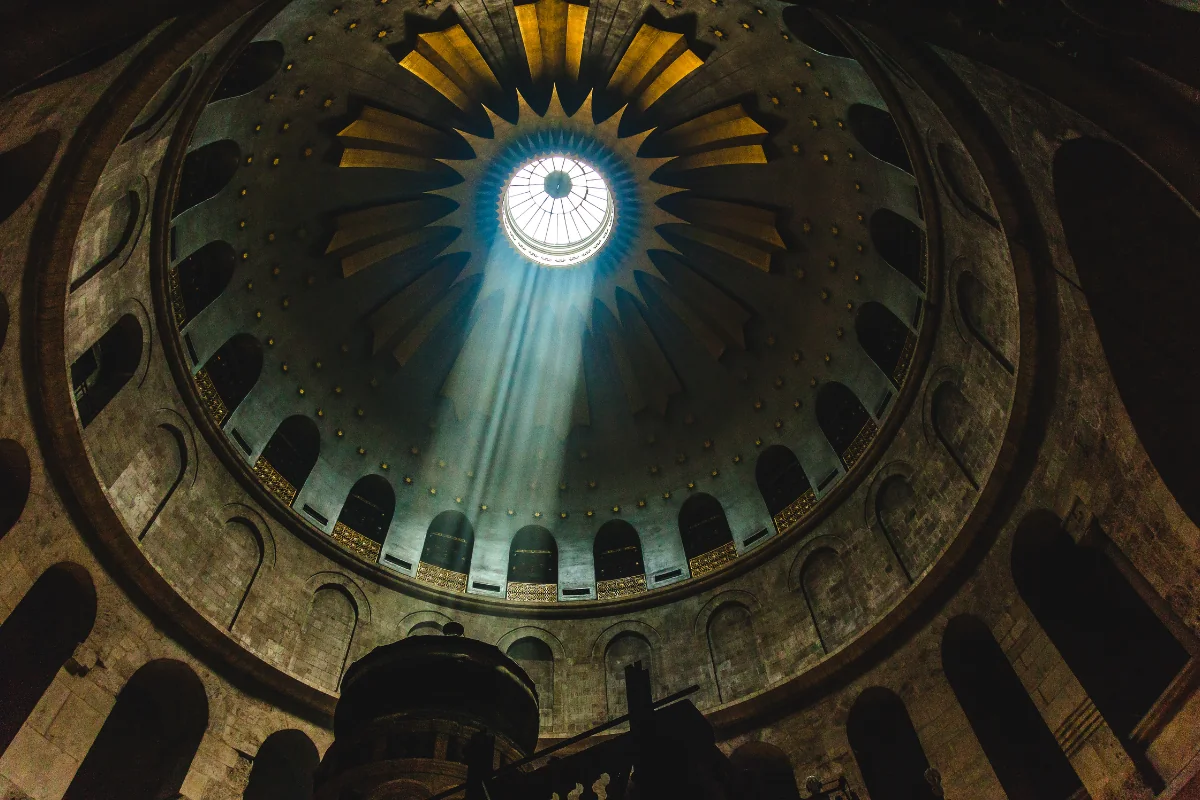
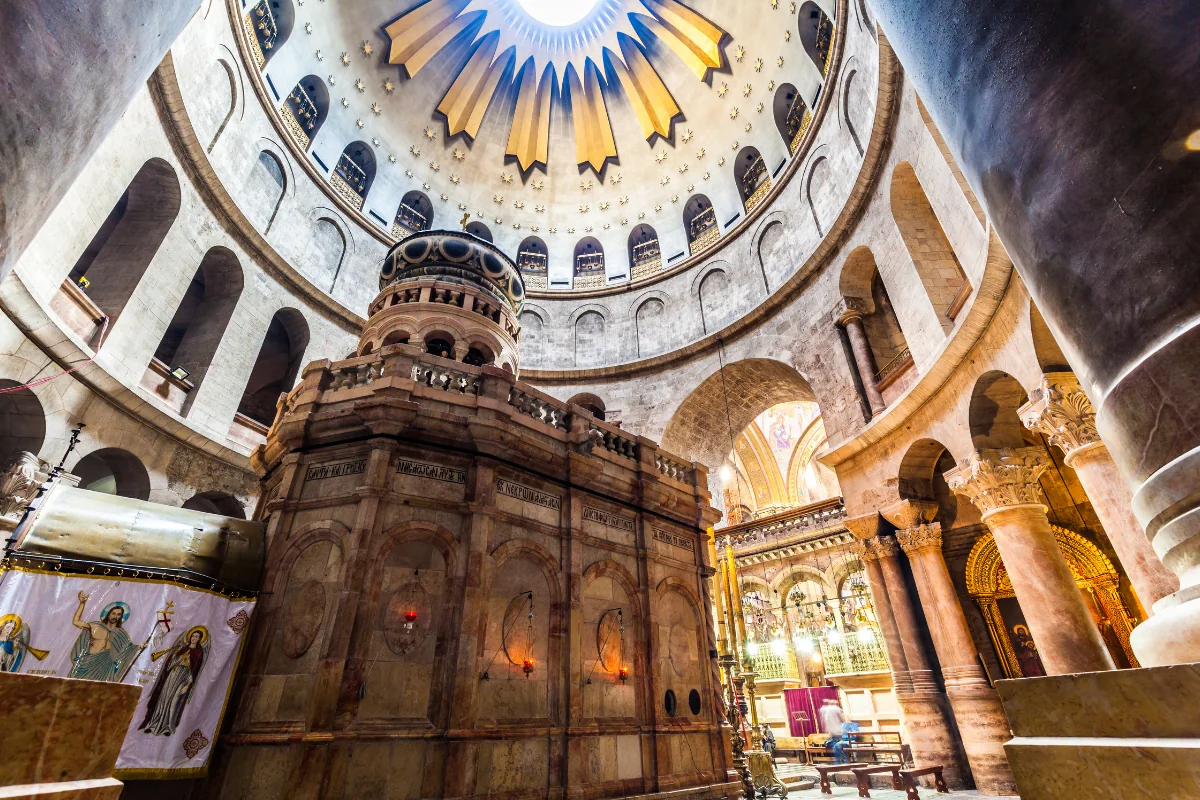
It is the church in Jerusalem's Old City built over both Golgotha, where Jesus was crucified, and the empty tomb where he was buried and rose.
The church rises over the hill of Golgotha and the tomb where the body of Jesus was laid. The Emperor Constantine built the first church here in the fourth century, after his mother Helena identified the site. Fire, earthquake, and conquest tore it down and raised it again many times. Much of what you walk into today is Crusader work from the twelfth century.
Six Christian communities share the building: Greek Orthodox, Roman Catholic, Armenian Orthodox, Coptic, Syriac, and Ethiopian. Their arrangement is so carefully balanced that a local Muslim family has held the keys for generations, unlocking the great doors every morning.
For much of the Christian world it is the holiest place on earth, because it holds both the crucifixion and the resurrection under one roof.
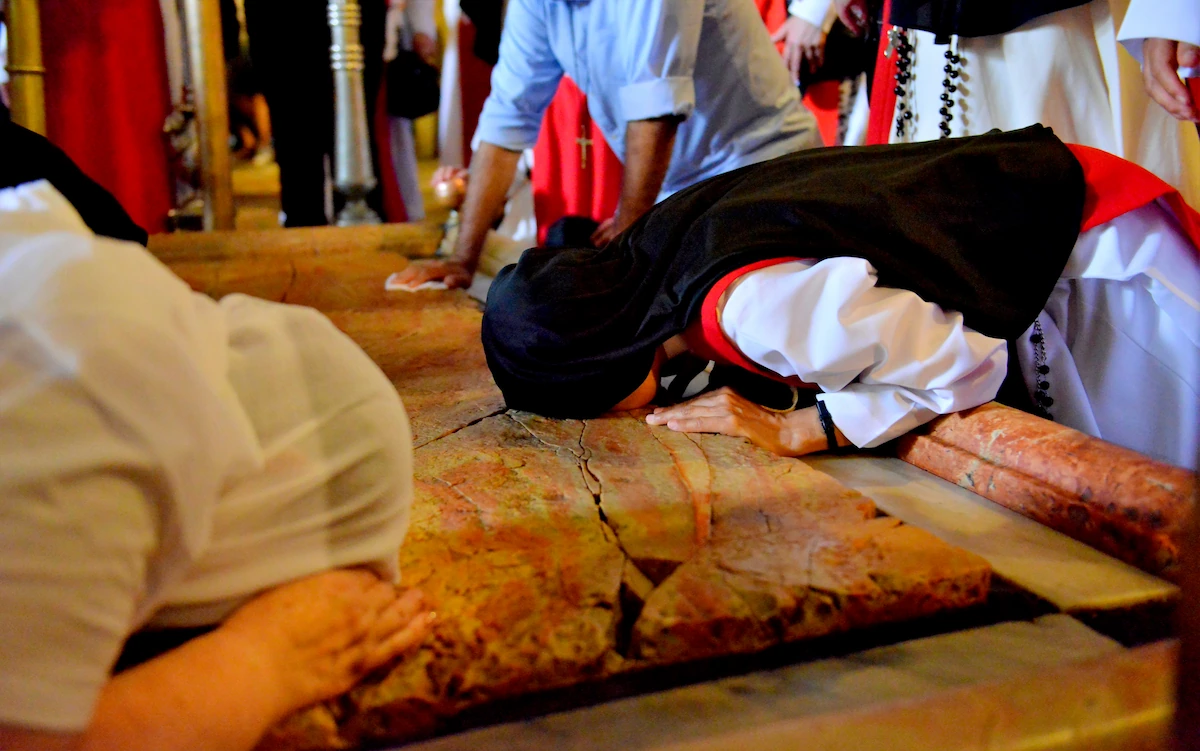
Under one roof you can stand at Golgotha, where the cross was raised, and only steps away at the empty tomb itself. Pilgrims kneel at the Stone of Anointing, where tradition holds the body of Jesus was prepared for burial.
The air carries incense and prayers in many languages at once. The angel's words at the tomb still hang over the whole place. "He is not here; he has risen." (Luke 24:6) Whatever tradition you come from, few people walk out the same as they walked in.


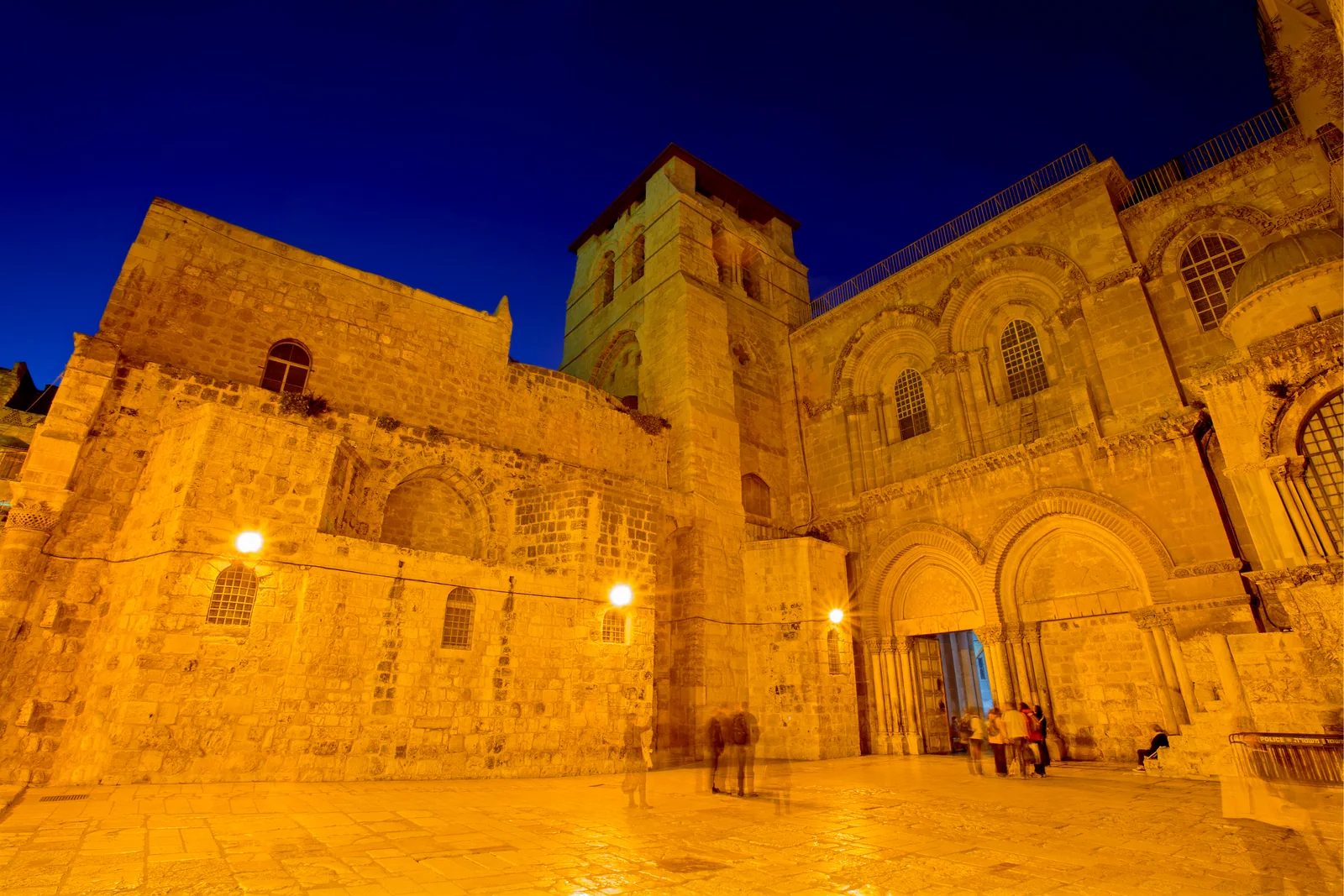

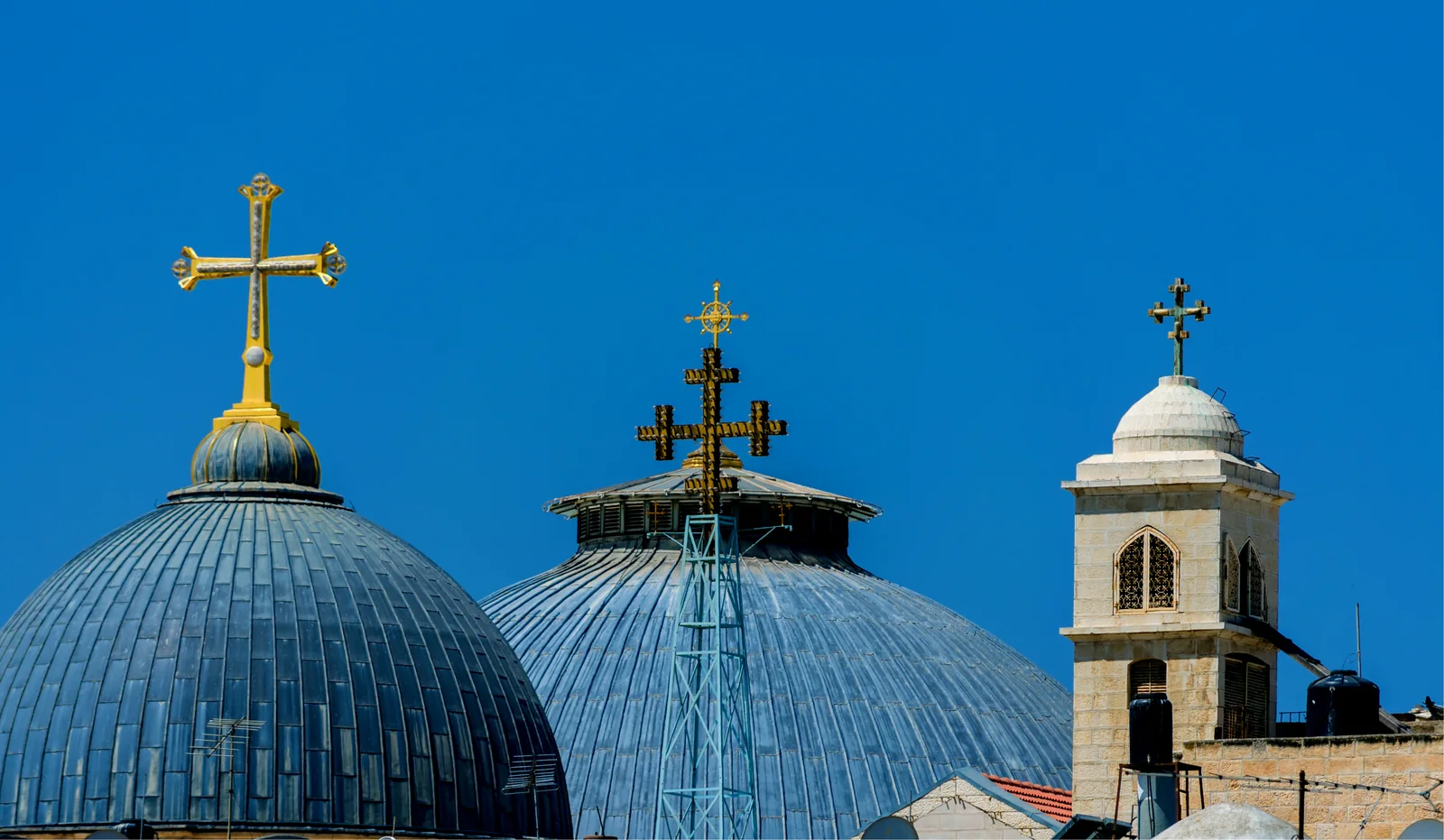

In the Christian Quarter of the Old City of Jerusalem, at the end of the Via Dolorosa.
Early morning is quietest. By midday the line to enter the tomb itself can grow long, so guided groups usually arrive early
Yes. Modest dress is required, meaning covered shoulders and knees for everyone. Comfortable shoes help, as you stand and walk on old stone
Holy Sites
Tell us which sites you hope to see and we will shape a journey around them.


