
 EN ▾EN ▾
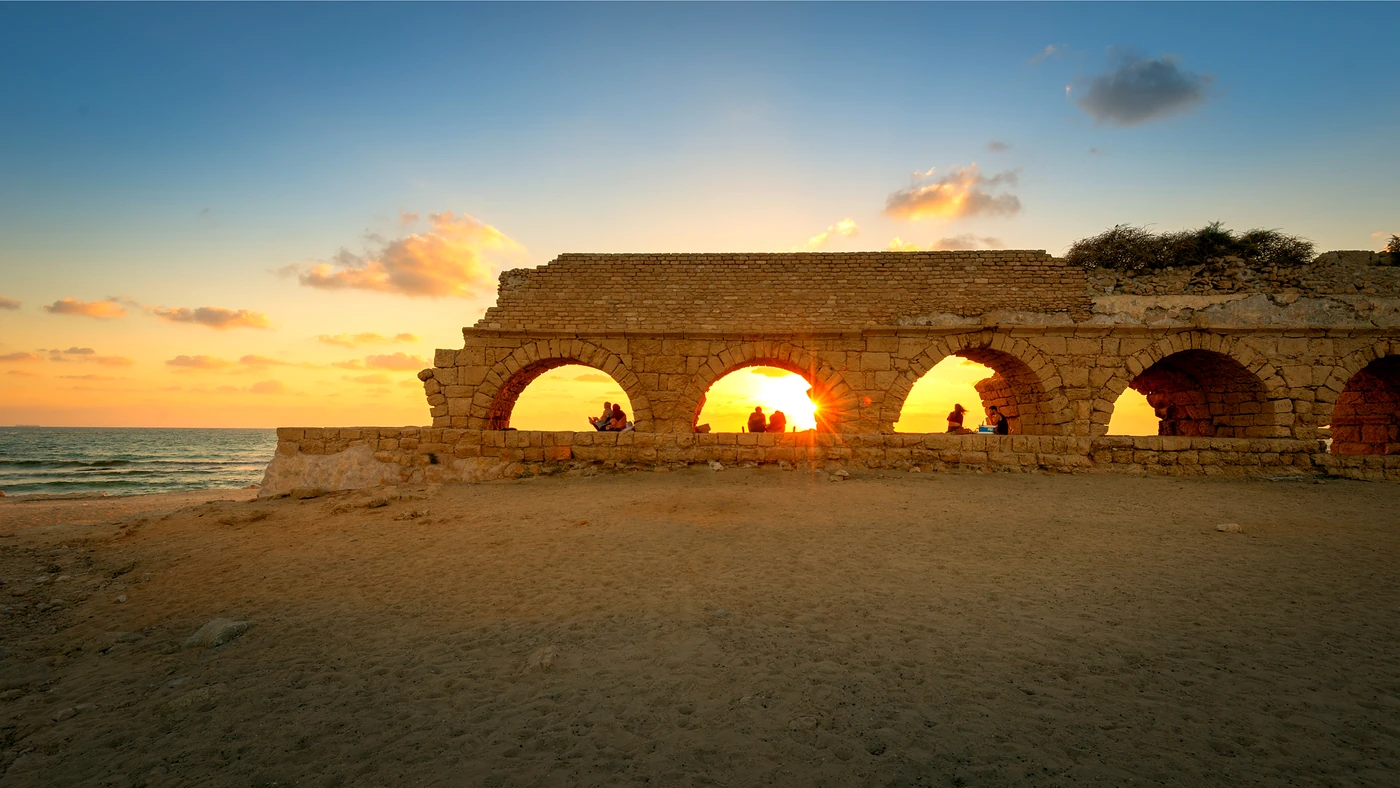

Caesarea Maritima is the vast ruined city and harbour on the Mediterranean coast, built by Herod the Great and later the Roman capital of the region.
Its ruins are among the most impressive in the land, a Roman theatre still used for concerts, a hippodrome beside the sea, a Crusader fortress, and the remains of Herod's great artificial harbour. It was here that the Roman governors lived, including Pontius Pilate, whose name was found carved in stone on the site.
For the early church, Caesarea was a place of beginnings, a meeting point between the Jewish world and the wider Roman empire into which the gospel would spread.
Because here Peter baptized the Roman centurion Cornelius and his household, the first gentiles to receive the gospel, opening the faith to all nations.
The moment changed the church forever. "God does not show favoritism, but accepts from every nation the one who fears him." (Acts 10:34 to 35)
What else happened at Caesarea?
Paul was imprisoned here for two years and made his defense before the governors, before finally sailing from this harbour toward Rome. For pilgrims, and especially for those from beyond the Middle East, Caesarea is where the gospel first broke past every border and began its journey to the whole world.

On the Mediterranean coast between Tel Aviv and Haifa, often the first stop on the way north to Galilee.
The Roman theatre, Herod's harbour, the hippodrome by the sea, and the Crusader fortress.
Peter baptized the first gentiles here, the household of Cornelius, and Paul was held here before sailing to Rome.
Holy Sites
Tell us which sites you hope to see and we will shape a journey around them.


