 EN ▾
Your Church Has Kept Vigil in Jerusalem for Centuries. Come and Join It.
A bond older than most nations
For more than a thousand years, an Ethiopian community has kept an unbroken presence at the very heart of Christendom, on the rooftop of the Church of the Holy Sepulchre. Through favor and through hardship, they have never left. When you come to Jerusalem, you are not arriving as a stranger. You are coming home to a place your church has held all along.
"Ethiopia will stretch out her hands to God."
(Psalm 68:31)
Where your community has always prayed
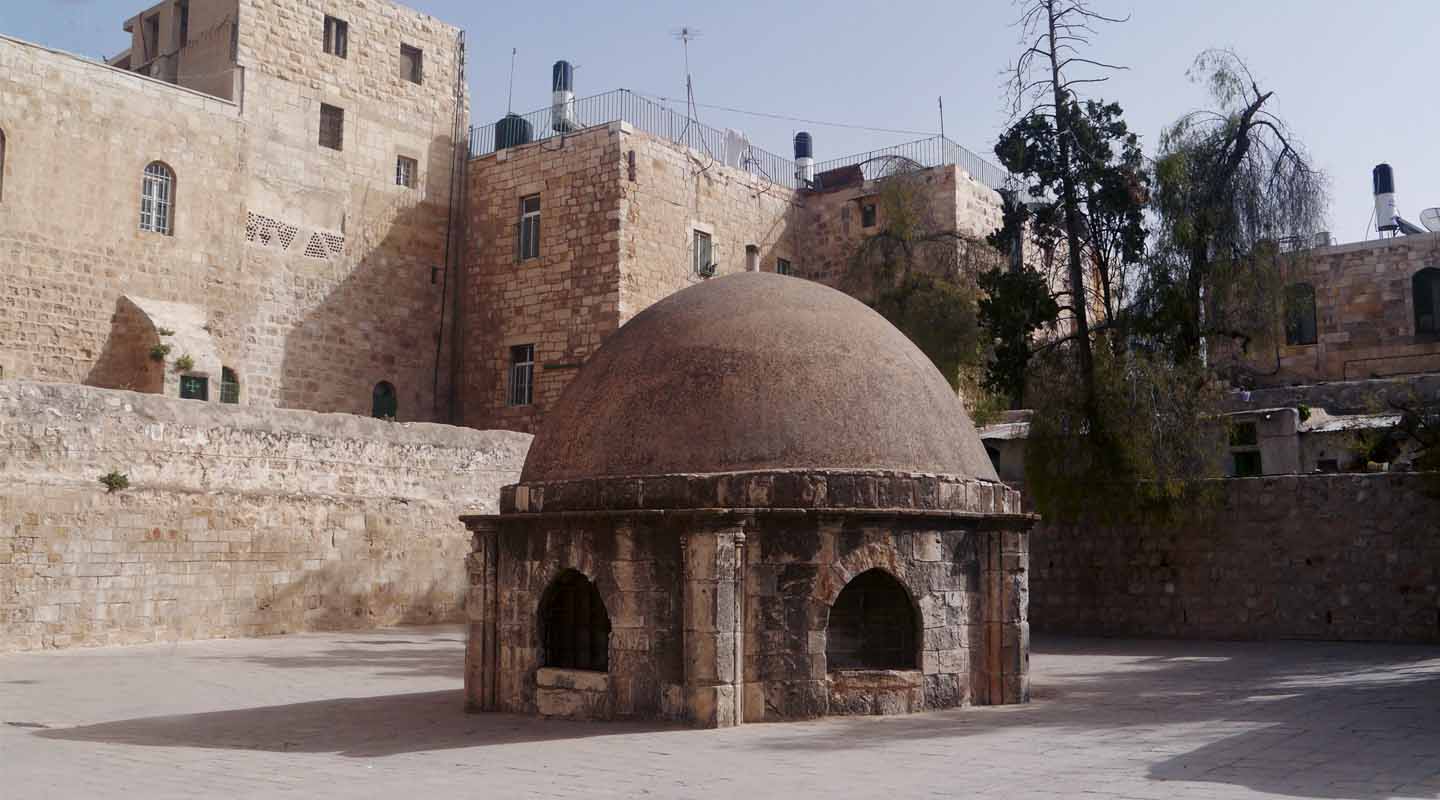
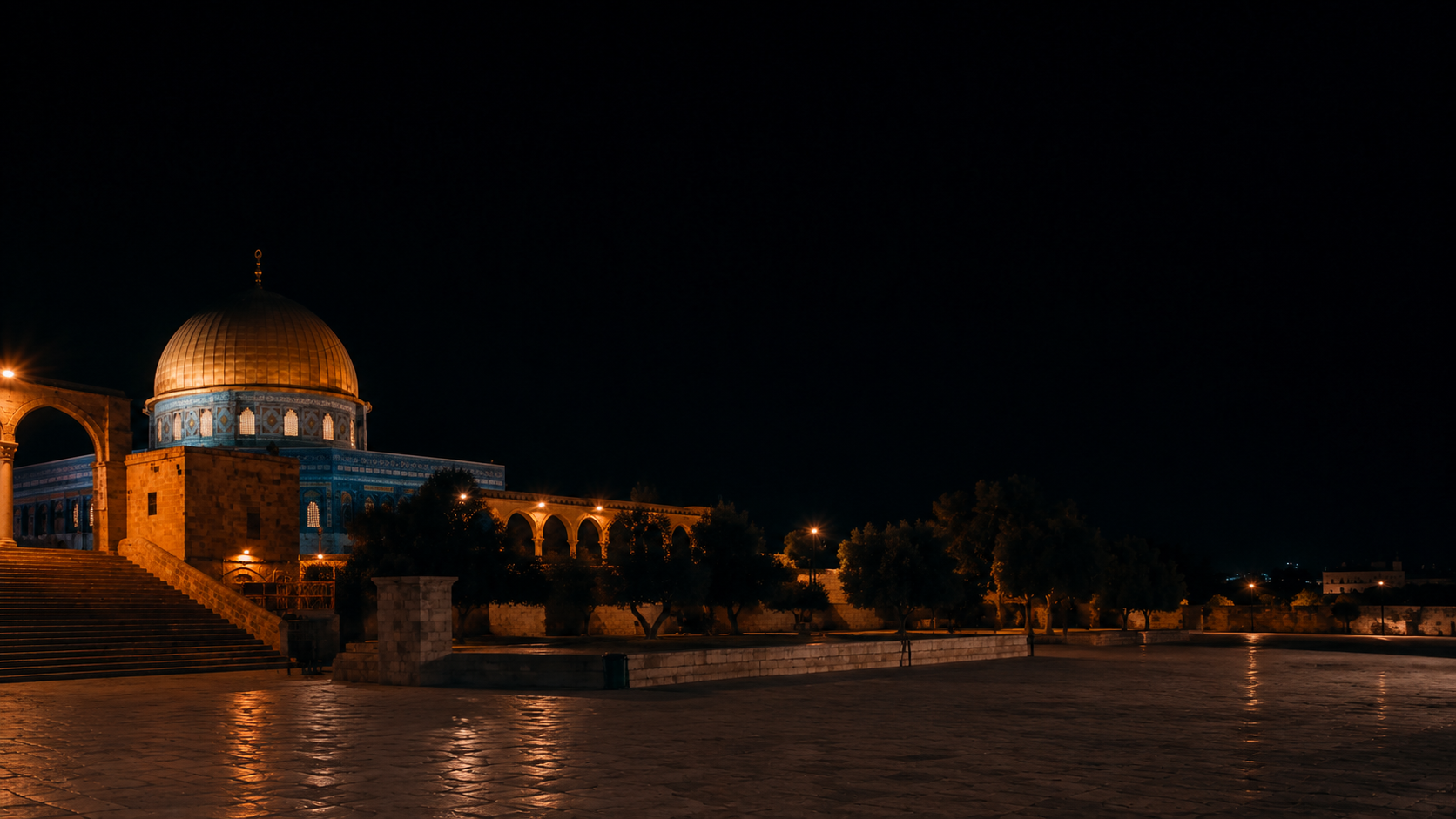
On the rooftop of the holiest church in the world sits Deir es-Sultan, a small monastery of Ethiopian Orthodox monks living in simple cells around a quiet courtyard. It is one of the most remarkable places in all of Jerusalem.
During Holy Week, this rooftop becomes the center of the Ethiopian observance. The Good Fridayprocession makes its way here. On the eve of the Resurrection, the courtyard fills with candlelight forthe Easter vigil, and the ancient words are sung in Ge'ez under the open Jerusalem sky. On thispilgrimage, you do not watch from the outside. You take your place among them.

The pilgrimage made for this journey
13 Days: Ethiopian and Eritrean Orthodox Holy Week and Fasika in Jerusalem
Keep Holy Week in the holy city itself, worship with your community at Deir es-Sultan, and celebrate the Resurrection where it happened
Upcoming departures
Stories from happy travelers
"Their integrity is unmatched in the travel business. If you are looking for an agent that actually has your back look no further."
"I was by myself when I had begun my trip. But now, I have got a big family here in different states as well as in Jerusalem."
"From the moment we arrived in Israel to the day we departed, we experienced five-star service."
"The trip experience was amazing. Our group were thoroughly happy with the accommodations, transfers and all of the special arrangements made."
"We had a great time, wonderful people, delicious food and comfortable accommodation, thank you for this fantastic experience."
"Our Easter pilgrimage with AJET Israel was truly a once in a lifetime experience."
Frequently asked journey queries

Latin Catholic priests are welcome to bring their alb, stole and celebret. Orthodox clergy should bring their epitrachelion, felon and a letter of blessing from their bishop. Protestant ministers who plan to lead a private Communion, for example at the Garden Tomb, are encouraged to bring their robes and Communion vessels. We handle the arrangements at each site, so you can simply lead your people in worship.
Major credit cards (Visa, Mastercard) are accepted across hotels, large pilgrim centers, and major stores in Jerusalem, Tel Aviv, and Tiberias. For daily incidentals, small souvenir vendors in the Old City, and tipping, US Dollars (USD) in clean, crisp, small bills ($1, $5, $10, and $20) are widely accepted across Israel, Jordan, and Bethlehem. Local currency (New Israeli Shekels / Jordanian Dinars) can also be obtained easily via standard bank ATMs near your hotel.
For multi-country itineraries connecting Israel with Jordan (Petra, Mount Nebo) or Egypt (Mount Sinai), an AJET border liaison escorts your group through both departure and arrival terminals. We coordinate advance border manifests, assist with luggage transfers across the neutral zone shuttle, and guide you through immigration control step-by-step to minimize transit wait times.
Border Exit Fees: The Israeli land border departure tax (at Allenby/King Hussein or Sheikh Hussein) is mandated by the Israel Airports Authority and is payable in local currency (currently ~185–195 NIS, approximately $50–$55 USD per person). The Jordanian departure tax is 10 JOD (approx. $15 USD). Border departure taxes and terminal shuttle bus transfers are paid locally at the border counters; our guide coordinates the collection and payment as a single group so you never have to navigate the cashier counters alone.
All site entry fees, national park permits, and personal whisper audio transmitter systems are 100% included in your package price. We never surprise our guests with on-site ticket requests. The only items not included are discretionary personal souvenirs, international airfare (unless your group package specifies group flights), and driver/guide tips, which follow transparent industry guidelines ($8–$10/day for guides, $5–$7/day for drivers).
Our journeys are designed with balanced, contemplative pacing rather than hurried sightseeing. While walking on historic stone pavements in the Old City of Jerusalem is a central part of the journey, our modern luxury motorcoaches drop groups as close to site entrances as legally permitted. We integrate regular shaded rest stops, provide comfortable whisper audio headsets so you never have to strain to hear, and our team provides advance notice on stair-heavy days so you can pace yourself comfortably.
Yes. Unlike generic tour operators, AJET specializes in faith-based journeys. We coordinate directly with our partner first class, 4-star hotel kitchens (with deluxe 5-star properties available on custom private itineraries) to provide authentic fasting-compliant meals (including vegan/vegetarian Tsom menus for Ethiopian and Eastern Orthodox pilgrims, Catholic Friday abstinence, and Halal or Kosher requirements) throughout your stay in Jerusalem, Bethlehem, and Galilee.
Your peace of mind is our highest priority. AJET operates a dedicated, 24/7 local operations desk in Jerusalem that continuously monitors regional conditions, road access, and holy site schedules in direct communication with local authorities and tourism police. Our itineraries are fully dynamic: if localized congestion or security precautions affect any specific corridor, our veteran field team adjusts the route in real time to ensure uninterrupted, comfortable, and peaceful travel.
Yes. You take part in the washing of feet, the Good Friday procession to Deir es-Sultan, the Easter vigil, and the Fasika feast. Taking part in these observances at the holy sites themselves is the heart of the journey.
Yes. Your guide speaks Amharic, Ge'ez, and English, and the Holy Week observances follow the Ethiopian Orthodox rite. This is a pilgrimage designed for the Ethiopian and Eritrean Orthodox faithful, not a general tour with a translation added.
It is honored as the place where John baptized Jesus, and is recognized by the Vatican and UNESCO.
Yes. Groups come down to the water to pray and to renew their baptismal promises.
On the eastern, Jordanian bank of the Jordan River, across from Qasr al-Yahud and near the Dead Sea.
In old Cairo, an easy visit alongside the pyramids on an Egypt tour.
One of the oldest working monasteries in the world, built around the site honored as the burning bush.
Most pilgrims climb before dawn by the camel path or the steps of repentance, reaching the summit for sunrise.
In the south of the Sinai desert in Egypt, with Saint Catherine's Monastery at its foot.
John was exiled here and received the visions of the Book of Revelation.
The Cave of the Apocalypse and the fortified Monastery of Saint John, above the village of Chora.
A small Greek island in the Aegean Sea, usually reached by cruise ship on a footsteps of Paul or Revelation journey.
Paul lived and worked here for eighteen months and later wrote the Corinthians two of his letters.
The Bema where Paul stood before Gallio, the temple of Apollo, the marketplace, and the nearby Corinth Canal.
In southern Greece near the isthmus, about ninety minutes from Athens, usually visited as a day excursion.
The Library of Celsus, the great theatre, the Basilica of Saint John, and the House of the Virgin Mary.
On the western coast of Turkey, near the port of Kusadasi, reached by land or on a Greek islands cruise.
It is the room honored as the place of the Last Supper and of Pentecost, where the church was born.
The Upper Room, the Tomb of King David, and the Church of the Dormition.
Just outside the southwestern wall of the Old City of Jerusalem, a short walk from the Zion Gate.
Peter baptized the first gentiles here, the household of Cornelius, and Paul was held here before sailing to Rome.
The Roman theatre, Herod's harbour, the hippodrome by the sea, and the Crusader fortress.
On the Mediterranean coast between Tel Aviv and Haifa, often the first stop on the way north to Galilee.
The angel Gabriel announced the birth of Jesus to Mary here, and Jesus grew up in this town.
The Basilica of the Annunciation over the grotto of Mary's home, and the nearby Church of Saint Joseph.
In the hills of lower Galilee, a short drive from Cana and Mount Tabor, and the largest Arab city in Israel today.
On the northern shore of the Sea of Galilee, a short drive from Capernaum and Tabgha.
The white limestone synagogue built over the one where Jesus taught, and the remains of Peter's house beneath a modern church.
On the north shore of the Sea of Galilee, close to Tabgha and the Mount of Beatitudes, so all three are usually visited on the same day.
Yes. A baptistery marks the traditional site on the river near Philippi, and many groups hold a moment of worship or vow renewal there.
In northern Greece, near the modern city of Kavala. It is a key stop on footsteps of Paul pilgrimages.
Yes. You can climb the ancient rock of the Areopagus itself, look up at the Parthenon, and read Paul's sermon from Acts 17 on the spot.
In Athens, Greece, on a rocky outcrop just below the Acropolis. It is a central stop on footsteps of Paul pilgrimages through Greece.
A fair amount. The walk through the Siq to the Treasury is over a kilometer, on uneven ground, and the wider site is large. Comfortable shoes are essential.
In southern Jordan. It is a highlight of Israel and Jordan combination tours and the longer Egypt, Jordan, and Israel journeys.
In Jordan, near the town of Madaba, a short drive from the capital Amman. It is a standard stop on Israel and Jordan combination pilgrimages.
The famous loaves and fishes mosaic in the Church of the Multiplication, and the Church of the Primacy of Peter beside the water.
On the northwest shore of the Sea of Galilee, very close to Capernaum and the Mount of Beatitudes, so all three are usually visited together.
Yes. The extreme salt content makes you float effortlessly on the surface. It is a remarkable and enjoyable experience, and one of the highlights people remember most.
Jericho is a regular, well-established stop on guided pilgrimages. As with all travel here, your licensed guide reads conditions and plans accordingly.
Yes. As the oldest city on earth, with strong biblical ties and the Mount of Temptation above it, it is a memorable stop, especially on the way between Jerusalem and the Jordan or Galilee.
Yes, a chapel, peaceful gardens, and ancient shepherds' caves. It is a reflective, uncrowded stop rather than a grand monument.
It is in Beit Sahour, just east of Bethlehem, a short drive from the Basilica of the Nativity, in the West Bank.
The Church of Saint John the Baptist, the Church of the Visitation, and Mary's Spring in the valley between them.
In the wooded hills just southwest of Jerusalem, a short drive from the city center.
Jonah set sail from here to flee God, Peter raised Tabitha to life, and Peter received the rooftop vision opening the faith to the gentiles.
The restored stone lanes above the harbour, Saint Peter's Church, viewpoints back along the coast, and the artists' quarter.
On the Mediterranean coast in the southern part of modern Tel Aviv.
The Muhraka viewpoint over the Jezreel Valley, the Stella Maris Monastery, the Cave of Elijah, and the nearby Baha'i Gardens in Haifa.
Above the city of Haifa in northern Israel, running down to the Mediterranean coast.
The Wedding Church over the traditional site, with ancient stone jars recalling the six jars of the miracle.
In the hills of lower Galilee, in northern Israel, a short drive from Nazareth.
The Church of the Transfiguration and sweeping views across the Jezreel Valley below, one of the finest vistas in the region.
In lower Galilee, rising from the Jezreel Valley in northern Israel.
East of the Old City of Jerusalem, across the Kidron Valley, directly opposite the Temple Mount.
Yes. Excavations uncovered the twin pools exactly as John's Gospel describes, confirming a site scholars had once doubted existed.
Just inside the Lions' Gate in the Old City of Jerusalem, beside the Church of Saint Anne.
Yes. It is reached through a passage from the Ethiopian community's quarters onto the rooftop courtyard. The space is contemplative, so a quiet and respectful presence matters, and modest dress is required.
On the rooftop of the Church of the Holy Sepulchre, above the Chapel of Saint Helena, in the Christian Quarter of the Old City of Jerusalem.
Yes, if you would like to. Meeting the living Christian communities of the Holy Land, sometimes called the living stones, adds a dimension many pilgrims treasure. We can build these encounters into your journey where they fit, so the land feels alive, not only ancient.
That is one of the things we do best. We regularly unite families and congregations from many countries and backgrounds into one group, arriving as one in Jerusalem. Every tradition is honored with care, and no one is treated as an afterthought.
Yes, and these are often the moments people remember most. Renewal of baptismal vows in the Jordan River, communion at the Garden Tomb, a private Mass or worship service at a holy site, group prayer at the Western Wall. Tell us what matters to your group, and we arrange it in advance.
Yes. We offer complimentary places for group leaders based on the size of the group they bring, so leading a pilgrimage is rewarded, not a burden. The details scale with your group, and we will lay them out clearly when we build your proposal.
Absolutely, and we encourage it. Your own leader guides the worship, the devotions, and the spiritual life of the group. Our role is to carry every logistic so they are free to shepherd their people, not to manage buses and bookings.
All of them, and each with genuine depth rather than a one-size approach. Protestant, Catholic, Orthodox, Ethiopian and Eritrean Orthodox, and Evangelical groups all travel with us, and we shape each journey to that tradition, from communion at the Garden Tomb to the Ethiopian Holy Week at Deir es-Sultan.
Our guides serve in English, Amharic, Tigrinya, and French, so you can experience the Holy Land in the language of your heart. For Ethiopian and Eritrean Orthodox pilgrimages, guidance follows the tradition in Amharic and Ge'ez, not a translation added on top.
Group size varies by journey, and we keep them at a size where the experience stays personal and the guide can give real attention. For private and family pilgrimages, the group is simply your own party. Tell us your preference and we will be honest about what each option feels like.
You are welcome as a solo traveler, a couple, a family, or a full group. Many people arrive on their own and leave with a whole new family, which is one of the most common things we hear. You will never feel alone on one of our journeys.
Each tour page itemizes its inclusions and exclusions in a clear side-by-side format so there are never any surprises. In general, all standard AJET pilgrimages include first class hotel accommodation, daily breakfast and dinner (half board), modern air-conditioned group transfers, a licensed biblical guide, personal whisper audio headsets, and all scheduled holy site entrance fees. International flights, daily lunches, driver and guide gratuities, travel insurance, and the ETA-IL entry authorization are excluded unless specifically arranged for a custom private delegation.
Yes. Vegetarian, vegan, gluten-free, halal, fasting periods, and other needs are all accommodated when we know in advance. For Orthodox travelers, we pay particular attention to fasting seasons. Just tell us when you book, and we arrange it quietly.
There is a fair amount of walking, often on old stone and uneven ground, with some steps at certain sites. Most people of reasonable health manage well, and the pace is unhurried. If anyone has mobility needs, tell us in advance and we plan the days around them.
Comfortable, clean, and well located, chosen so you rest well and wake near the places you have come to see. Most journeys use first class, four-star hotels, with a tourist class option if your group prefers. Daily breakfast and dinner are included, so you are cared for from morning to night.
Not at all. We regularly bring together travelers holding many different passports into one group, which is part of what we do best. We simply guide each traveler through the entry requirements for their own nationality, so everyone arrives smoothly and the group meets as one.
Your passport should be valid well beyond your travel dates, and six months beyond your return is the safe standard many airlines expect. If your passport is close to expiring, renew it before you book flights. We will remind you to check this early.
Yes. For group pilgrimages, especially from Ethiopia and Eritrea, we assist with the group entry process directly, working between Jerusalem and Addis Ababa to smooth the way. Group leaders find this one of the most valuable things we take off their shoulders.
Yes. Entry requirements for Ethiopian and Eritrean passport holders need more hands-on support, and AJET has long experience guiding travelers through exactly what their passport requires. We coordinate between our teams in Jerusalem and Addis Ababa at every step, so you are never left to work it out alone. Please start the process early, as some steps take time.
Citizens of the United States, Canada, the United Kingdom, the European Union, Australia, and other visa-exempt countries do not require a consular sticker visa. However, all travelers from visa-exempt nations must obtain an approved ETA-IL (Electronic Travel Authorization) before boarding their flight to Israel.
The ETA-IL application is submitted online via the official Population and Immigration Authority portal, costs 25 NIS (approx. $7 USD), is valid for up to two years (or until your passport expires), and covers stays of up to 90 days. We strongly recommend submitting your ETA-IL at least 72 hours prior to departure. Your passport must have at least six months of validity remaining beyond your scheduled return date. For travelers requiring consular entry visas or group visas (including Ethiopian and Eritrean passport holders), AJET coordinates the manifest and official church invitation letters directly between Jerusalem and your home parish.
None at all. A proposal is free and carries no commitment. We would rather answer all your questions and let you decide in your own time than pressure anyone. Many travelers go back and forth with us for weeks before they are ready, and that is exactly how it should be.
Yes. When you book directly with us, we guarantee our best rate. You are dealing with the operator on the ground, not a reseller adding a margin, so booking direct is both the best price and the most direct line of support throughout your journey.
Our full cancellation terms are set out plainly in your proposal, with clear timeframes rather than vague fine print. The closer to departure a cancellation happens, the more of the trip cost is already committed to hotels and services, so terms reflect that. If you reserve a journey online without a fixed departure date and we cannot confirm dates that match yours, your deposit is returned in full. Beyond the written policy, our record on treating people fairly speaks for itself, including refunding travelers in full during a genuine wartime disruption.
When you reserve a journey with a deposit on its tour page, you pay by card, and the payment is processed securely by Square. AJET never sees or stores your card number. Scheduled departures and group bookings are paid through WeTravel, a trusted and secure travel payment platform, by card or bank transfer. Either way, every transaction is documented, we guide you through it, and you always receive a clear receipt.
The deposit is shown on each tour page, typically 300 or 400 US dollars per person, and it secures your place on the journey. The remaining balance is due 60 days before departure, and the exact schedule is set out clearly in your proposal, with no hidden dates. We will always remind you in good time, so nothing is ever a surprise.
It starts with a conversation, not a checkout. You tell us who is traveling and what you are hoping for, and we prepare a tailored proposal at no cost or obligation. When you are ready, a signed form and a deposit confirm your place, and we take care of the rest from there. If you have already chosen a journey, many tour pages also let you pick your dates and reserve with a card deposit straight away.
No. Yardenit is a separate baptism site further north by the Sea of Galilee. Qasr al-Yahud is the traditional biblical location near Jericho.
Yes. Steps lead into the river and pilgrims are welcome to enter for a renewal of baptismal vows. Bring a change of clothes, or use the white garments available.
On the Jordan River near Jericho, below sea level in the Jordan Valley, a short drive from Jerusalem or on the way to Galilee.
Yes, the grotto is small and popular, so lines can form. Guides plan visits to reduce waiting where possible.
The Door of Humility was lowered in part to prevent carts from entering and to require all who come to bow. Bowing to enter has become part of the meaning.
In Bethlehem, in the West Bank, on Manger Square. It is a short drive from Jerusalem and a standard pilgrimage stop.
It is a shared public space, so quiet reflection is welcome, though formal services may be limited depending on the day and crowds.
No. The original is long gone. The present hall is a Crusader-era structure built over the traditional site, kept simple and unadorned.
On Mount Zion, just outside the Old City walls of Jerusalem, near the Tomb of David and the Church of the Dormition.
Yes. Writing a prayer on paper and placing it in a crack between the stones is a long-standing custom open to all visitors.
Frequently asked cruise queries
Latin Catholic priests are welcome to bring their alb, stole and celebret. Orthodox clergy should bring their epitrachelion, felon and a letter of blessing from their bishop. Protestant ministers who plan to lead a private Communion, for example at the Garden Tomb, are encouraged to bring their robes and Communion vessels. We handle the arrangements at each site, so you can simply lead your people in worship.
Major credit cards (Visa, Mastercard) are accepted across hotels, large pilgrim centers, and major stores in Jerusalem, Tel Aviv, and Tiberias. For daily incidentals, small souvenir vendors in the Old City, and tipping, US Dollars (USD) in clean, crisp, small bills ($1, $5, $10, and $20) are widely accepted across Israel, Jordan, and Bethlehem. Local currency (New Israeli Shekels / Jordanian Dinars) can also be obtained easily via standard bank ATMs near your hotel.
For multi-country itineraries connecting Israel with Jordan (Petra, Mount Nebo) or Egypt (Mount Sinai), an AJET border liaison escorts your group through both departure and arrival terminals. We coordinate advance border manifests, assist with luggage transfers across the neutral zone shuttle, and guide you through immigration control step-by-step to minimize transit wait times.
Border Exit Fees: The Israeli land border departure tax (at Allenby/King Hussein or Sheikh Hussein) is mandated by the Israel Airports Authority and is payable in local currency (currently ~185–195 NIS, approximately $50–$55 USD per person). The Jordanian departure tax is 10 JOD (approx. $15 USD). Border departure taxes and terminal shuttle bus transfers are paid locally at the border counters; our guide coordinates the collection and payment as a single group so you never have to navigate the cashier counters alone.
All site entry fees, national park permits, and personal whisper audio transmitter systems are 100% included in your package price. We never surprise our guests with on-site ticket requests. The only items not included are discretionary personal souvenirs, international airfare (unless your group package specifies group flights), and driver/guide tips, which follow transparent industry guidelines ($8–$10/day for guides, $5–$7/day for drivers).
Frequently asked journey queries
Latin Catholic priests are welcome to bring their alb, stole and celebret. Orthodox clergy should bring their epitrachelion, felon and a letter of blessing from their bishop. Protestant ministers who plan to lead a private Communion, for example at the Garden Tomb, are encouraged to bring their robes and Communion vessels. We handle the arrangements at each site, so you can simply lead your people in worship.
Major credit cards (Visa, Mastercard) are accepted across hotels, large pilgrim centers, and major stores in Jerusalem, Tel Aviv, and Tiberias. For daily incidentals, small souvenir vendors in the Old City, and tipping, US Dollars (USD) in clean, crisp, small bills ($1, $5, $10, and $20) are widely accepted across Israel, Jordan, and Bethlehem. Local currency (New Israeli Shekels / Jordanian Dinars) can also be obtained easily via standard bank ATMs near your hotel.
For multi-country itineraries connecting Israel with Jordan (Petra, Mount Nebo) or Egypt (Mount Sinai), an AJET border liaison escorts your group through both departure and arrival terminals. We coordinate advance border manifests, assist with luggage transfers across the neutral zone shuttle, and guide you through immigration control step-by-step to minimize transit wait times.
Border Exit Fees: The Israeli land border departure tax (at Allenby/King Hussein or Sheikh Hussein) is mandated by the Israel Airports Authority and is payable in local currency (currently ~185–195 NIS, approximately $50–$55 USD per person). The Jordanian departure tax is 10 JOD (approx. $15 USD). Border departure taxes and terminal shuttle bus transfers are paid locally at the border counters; our guide coordinates the collection and payment as a single group so you never have to navigate the cashier counters alone.
All site entry fees, national park permits, and personal whisper audio transmitter systems are 100% included in your package price. We never surprise our guests with on-site ticket requests. The only items not included are discretionary personal souvenirs, international airfare (unless your group package specifies group flights), and driver/guide tips, which follow transparent industry guidelines ($8–$10/day for guides, $5–$7/day for drivers).
Our journeys are designed with balanced, contemplative pacing rather than hurried sightseeing. While walking on historic stone pavements in the Old City of Jerusalem is a central part of the journey, our modern luxury motorcoaches drop groups as close to site entrances as legally permitted. We integrate regular shaded rest stops, provide comfortable whisper audio headsets so you never have to strain to hear, and our team provides advance notice on stair-heavy days so you can pace yourself comfortably.
Yes. Unlike generic tour operators, AJET specializes in faith-based journeys. We coordinate directly with our partner first class, 4-star hotel kitchens (with deluxe 5-star properties available on custom private itineraries) to provide authentic fasting-compliant meals (including vegan/vegetarian Tsom menus for Ethiopian and Eastern Orthodox pilgrims, Catholic Friday abstinence, and Halal or Kosher requirements) throughout your stay in Jerusalem, Bethlehem, and Galilee.
Your peace of mind is our highest priority. AJET operates a dedicated, 24/7 local operations desk in Jerusalem that continuously monitors regional conditions, road access, and holy site schedules in direct communication with local authorities and tourism police. Our itineraries are fully dynamic: if localized congestion or security precautions affect any specific corridor, our veteran field team adjusts the route in real time to ensure uninterrupted, comfortable, and peaceful travel.
Yes. You take part in the washing of feet, the Good Friday procession to Deir es-Sultan, the Easter vigil, and the Fasika feast. Taking part in these observances at the holy sites themselves is the heart of the journey.
Yes. Your guide speaks Amharic, Ge'ez, and English, and the Holy Week observances follow the Ethiopian Orthodox rite. This is a pilgrimage designed for the Ethiopian and Eritrean Orthodox faithful, not a general tour with a translation added.
It is honored as the place where John baptized Jesus, and is recognized by the Vatican and UNESCO.
Yes. Groups come down to the water to pray and to renew their baptismal promises.
On the eastern, Jordanian bank of the Jordan River, across from Qasr al-Yahud and near the Dead Sea.
In old Cairo, an easy visit alongside the pyramids on an Egypt tour.
One of the oldest working monasteries in the world, built around the site honored as the burning bush.
Most pilgrims climb before dawn by the camel path or the steps of repentance, reaching the summit for sunrise.
In the south of the Sinai desert in Egypt, with Saint Catherine's Monastery at its foot.
John was exiled here and received the visions of the Book of Revelation.
The Cave of the Apocalypse and the fortified Monastery of Saint John, above the village of Chora.
A small Greek island in the Aegean Sea, usually reached by cruise ship on a footsteps of Paul or Revelation journey.
Paul lived and worked here for eighteen months and later wrote the Corinthians two of his letters.
The Bema where Paul stood before Gallio, the temple of Apollo, the marketplace, and the nearby Corinth Canal.
In southern Greece near the isthmus, about ninety minutes from Athens, usually visited as a day excursion.
The Library of Celsus, the great theatre, the Basilica of Saint John, and the House of the Virgin Mary.
On the western coast of Turkey, near the port of Kusadasi, reached by land or on a Greek islands cruise.
It is the room honored as the place of the Last Supper and of Pentecost, where the church was born.
The Upper Room, the Tomb of King David, and the Church of the Dormition.
Just outside the southwestern wall of the Old City of Jerusalem, a short walk from the Zion Gate.
Peter baptized the first gentiles here, the household of Cornelius, and Paul was held here before sailing to Rome.
The Roman theatre, Herod's harbour, the hippodrome by the sea, and the Crusader fortress.
On the Mediterranean coast between Tel Aviv and Haifa, often the first stop on the way north to Galilee.
The angel Gabriel announced the birth of Jesus to Mary here, and Jesus grew up in this town.
The Basilica of the Annunciation over the grotto of Mary's home, and the nearby Church of Saint Joseph.
In the hills of lower Galilee, a short drive from Cana and Mount Tabor, and the largest Arab city in Israel today.
On the northern shore of the Sea of Galilee, a short drive from Capernaum and Tabgha.
The white limestone synagogue built over the one where Jesus taught, and the remains of Peter's house beneath a modern church.
On the north shore of the Sea of Galilee, close to Tabgha and the Mount of Beatitudes, so all three are usually visited on the same day.
Yes. A baptistery marks the traditional site on the river near Philippi, and many groups hold a moment of worship or vow renewal there.
In northern Greece, near the modern city of Kavala. It is a key stop on footsteps of Paul pilgrimages.
Yes. You can climb the ancient rock of the Areopagus itself, look up at the Parthenon, and read Paul's sermon from Acts 17 on the spot.
In Athens, Greece, on a rocky outcrop just below the Acropolis. It is a central stop on footsteps of Paul pilgrimages through Greece.
A fair amount. The walk through the Siq to the Treasury is over a kilometer, on uneven ground, and the wider site is large. Comfortable shoes are essential.
In southern Jordan. It is a highlight of Israel and Jordan combination tours and the longer Egypt, Jordan, and Israel journeys.
In Jordan, near the town of Madaba, a short drive from the capital Amman. It is a standard stop on Israel and Jordan combination pilgrimages.
The famous loaves and fishes mosaic in the Church of the Multiplication, and the Church of the Primacy of Peter beside the water.
On the northwest shore of the Sea of Galilee, very close to Capernaum and the Mount of Beatitudes, so all three are usually visited together.
Yes. The extreme salt content makes you float effortlessly on the surface. It is a remarkable and enjoyable experience, and one of the highlights people remember most.
Jericho is a regular, well-established stop on guided pilgrimages. As with all travel here, your licensed guide reads conditions and plans accordingly.
Yes. As the oldest city on earth, with strong biblical ties and the Mount of Temptation above it, it is a memorable stop, especially on the way between Jerusalem and the Jordan or Galilee.
Yes, a chapel, peaceful gardens, and ancient shepherds' caves. It is a reflective, uncrowded stop rather than a grand monument.
It is in Beit Sahour, just east of Bethlehem, a short drive from the Basilica of the Nativity, in the West Bank.
The Church of Saint John the Baptist, the Church of the Visitation, and Mary's Spring in the valley between them.
In the wooded hills just southwest of Jerusalem, a short drive from the city center.
Jonah set sail from here to flee God, Peter raised Tabitha to life, and Peter received the rooftop vision opening the faith to the gentiles.
The restored stone lanes above the harbour, Saint Peter's Church, viewpoints back along the coast, and the artists' quarter.
On the Mediterranean coast in the southern part of modern Tel Aviv.
The Muhraka viewpoint over the Jezreel Valley, the Stella Maris Monastery, the Cave of Elijah, and the nearby Baha'i Gardens in Haifa.
Above the city of Haifa in northern Israel, running down to the Mediterranean coast.
The Wedding Church over the traditional site, with ancient stone jars recalling the six jars of the miracle.
In the hills of lower Galilee, in northern Israel, a short drive from Nazareth.
The Church of the Transfiguration and sweeping views across the Jezreel Valley below, one of the finest vistas in the region.
In lower Galilee, rising from the Jezreel Valley in northern Israel.
East of the Old City of Jerusalem, across the Kidron Valley, directly opposite the Temple Mount.
Yes. Excavations uncovered the twin pools exactly as John's Gospel describes, confirming a site scholars had once doubted existed.
Just inside the Lions' Gate in the Old City of Jerusalem, beside the Church of Saint Anne.
Yes. It is reached through a passage from the Ethiopian community's quarters onto the rooftop courtyard. The space is contemplative, so a quiet and respectful presence matters, and modest dress is required.
On the rooftop of the Church of the Holy Sepulchre, above the Chapel of Saint Helena, in the Christian Quarter of the Old City of Jerusalem.
Yes, if you would like to. Meeting the living Christian communities of the Holy Land, sometimes called the living stones, adds a dimension many pilgrims treasure. We can build these encounters into your journey where they fit, so the land feels alive, not only ancient.
That is one of the things we do best. We regularly unite families and congregations from many countries and backgrounds into one group, arriving as one in Jerusalem. Every tradition is honored with care, and no one is treated as an afterthought.
Yes, and these are often the moments people remember most. Renewal of baptismal vows in the Jordan River, communion at the Garden Tomb, a private Mass or worship service at a holy site, group prayer at the Western Wall. Tell us what matters to your group, and we arrange it in advance.
Yes. We offer complimentary places for group leaders based on the size of the group they bring, so leading a pilgrimage is rewarded, not a burden. The details scale with your group, and we will lay them out clearly when we build your proposal.
Absolutely, and we encourage it. Your own leader guides the worship, the devotions, and the spiritual life of the group. Our role is to carry every logistic so they are free to shepherd their people, not to manage buses and bookings.
All of them, and each with genuine depth rather than a one-size approach. Protestant, Catholic, Orthodox, Ethiopian and Eritrean Orthodox, and Evangelical groups all travel with us, and we shape each journey to that tradition, from communion at the Garden Tomb to the Ethiopian Holy Week at Deir es-Sultan.
Our guides serve in English, Amharic, Tigrinya, and French, so you can experience the Holy Land in the language of your heart. For Ethiopian and Eritrean Orthodox pilgrimages, guidance follows the tradition in Amharic and Ge'ez, not a translation added on top.
Group size varies by journey, and we keep them at a size where the experience stays personal and the guide can give real attention. For private and family pilgrimages, the group is simply your own party. Tell us your preference and we will be honest about what each option feels like.
You are welcome as a solo traveler, a couple, a family, or a full group. Many people arrive on their own and leave with a whole new family, which is one of the most common things we hear. You will never feel alone on one of our journeys.
Each tour page itemizes its inclusions and exclusions in a clear side-by-side format so there are never any surprises. In general, all standard AJET pilgrimages include first class hotel accommodation, daily breakfast and dinner (half board), modern air-conditioned group transfers, a licensed biblical guide, personal whisper audio headsets, and all scheduled holy site entrance fees. International flights, daily lunches, driver and guide gratuities, travel insurance, and the ETA-IL entry authorization are excluded unless specifically arranged for a custom private delegation.
Yes. Vegetarian, vegan, gluten-free, halal, fasting periods, and other needs are all accommodated when we know in advance. For Orthodox travelers, we pay particular attention to fasting seasons. Just tell us when you book, and we arrange it quietly.
There is a fair amount of walking, often on old stone and uneven ground, with some steps at certain sites. Most people of reasonable health manage well, and the pace is unhurried. If anyone has mobility needs, tell us in advance and we plan the days around them.
Comfortable, clean, and well located, chosen so you rest well and wake near the places you have come to see. Most journeys use first class, four-star hotels, with a tourist class option if your group prefers. Daily breakfast and dinner are included, so you are cared for from morning to night.
Not at all. We regularly bring together travelers holding many different passports into one group, which is part of what we do best. We simply guide each traveler through the entry requirements for their own nationality, so everyone arrives smoothly and the group meets as one.
Your passport should be valid well beyond your travel dates, and six months beyond your return is the safe standard many airlines expect. If your passport is close to expiring, renew it before you book flights. We will remind you to check this early.
Yes. For group pilgrimages, especially from Ethiopia and Eritrea, we assist with the group entry process directly, working between Jerusalem and Addis Ababa to smooth the way. Group leaders find this one of the most valuable things we take off their shoulders.
Yes. Entry requirements for Ethiopian and Eritrean passport holders need more hands-on support, and AJET has long experience guiding travelers through exactly what their passport requires. We coordinate between our teams in Jerusalem and Addis Ababa at every step, so you are never left to work it out alone. Please start the process early, as some steps take time.
Citizens of the United States, Canada, the United Kingdom, the European Union, Australia, and other visa-exempt countries do not require a consular sticker visa. However, all travelers from visa-exempt nations must obtain an approved ETA-IL (Electronic Travel Authorization) before boarding their flight to Israel.
The ETA-IL application is submitted online via the official Population and Immigration Authority portal, costs 25 NIS (approx. $7 USD), is valid for up to two years (or until your passport expires), and covers stays of up to 90 days. We strongly recommend submitting your ETA-IL at least 72 hours prior to departure. Your passport must have at least six months of validity remaining beyond your scheduled return date. For travelers requiring consular entry visas or group visas (including Ethiopian and Eritrean passport holders), AJET coordinates the manifest and official church invitation letters directly between Jerusalem and your home parish.
None at all. A proposal is free and carries no commitment. We would rather answer all your questions and let you decide in your own time than pressure anyone. Many travelers go back and forth with us for weeks before they are ready, and that is exactly how it should be.
Yes. When you book directly with us, we guarantee our best rate. You are dealing with the operator on the ground, not a reseller adding a margin, so booking direct is both the best price and the most direct line of support throughout your journey.
Our full cancellation terms are set out plainly in your proposal, with clear timeframes rather than vague fine print. The closer to departure a cancellation happens, the more of the trip cost is already committed to hotels and services, so terms reflect that. If you reserve a journey online without a fixed departure date and we cannot confirm dates that match yours, your deposit is returned in full. Beyond the written policy, our record on treating people fairly speaks for itself, including refunding travelers in full during a genuine wartime disruption.
When you reserve a journey with a deposit on its tour page, you pay by card, and the payment is processed securely by Square. AJET never sees or stores your card number. Scheduled departures and group bookings are paid through WeTravel, a trusted and secure travel payment platform, by card or bank transfer. Either way, every transaction is documented, we guide you through it, and you always receive a clear receipt.
The deposit is shown on each tour page, typically 300 or 400 US dollars per person, and it secures your place on the journey. The remaining balance is due 60 days before departure, and the exact schedule is set out clearly in your proposal, with no hidden dates. We will always remind you in good time, so nothing is ever a surprise.
It starts with a conversation, not a checkout. You tell us who is traveling and what you are hoping for, and we prepare a tailored proposal at no cost or obligation. When you are ready, a signed form and a deposit confirm your place, and we take care of the rest from there. If you have already chosen a journey, many tour pages also let you pick your dates and reserve with a card deposit straight away.
No. Yardenit is a separate baptism site further north by the Sea of Galilee. Qasr al-Yahud is the traditional biblical location near Jericho.
Yes. Steps lead into the river and pilgrims are welcome to enter for a renewal of baptismal vows. Bring a change of clothes, or use the white garments available.
On the Jordan River near Jericho, below sea level in the Jordan Valley, a short drive from Jerusalem or on the way to Galilee.
Yes, the grotto is small and popular, so lines can form. Guides plan visits to reduce waiting where possible.
The Door of Humility was lowered in part to prevent carts from entering and to require all who come to bow. Bowing to enter has become part of the meaning.
In Bethlehem, in the West Bank, on Manger Square. It is a short drive from Jerusalem and a standard pilgrimage stop.
It is a shared public space, so quiet reflection is welcome, though formal services may be limited depending on the day and crowds.
No. The original is long gone. The present hall is a Crusader-era structure built over the traditional site, kept simple and unadorned.
On Mount Zion, just outside the Old City walls of Jerusalem, near the Tomb of David and the Church of the Dormition.
Yes. Writing a prayer on paper and placing it in a crack between the stones is a long-standing custom open to all visitors.